Harvest-themed casual games look alike in the store and play very differently in the hand. Three distinct families sit under that art, and the useful habits in one of them actively cost you in another.
The three families
- Collect boards. Gather a stated number of a specific tile. The supply on the board is the constraint, so spending the goal colour on small matches early is what loses these levels.
- Star-and-task boards. Win a level to earn a currency, then spend that currency on a storyline elsewhere. The board is a generator; the interesting decisions are in what you spend on.
- Hidden-object rooms. Find named items in a cluttered scene, usually against a timer, often alternating with match levels. Nothing about matching transfers here at all.
The store art for all three is the same warm palette of fruit, wood and sunlight, which is why people frequently install one expecting another.
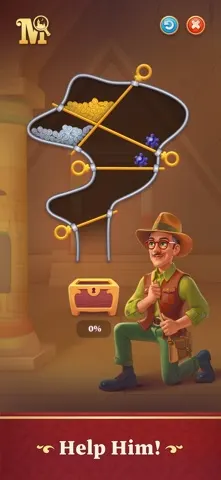
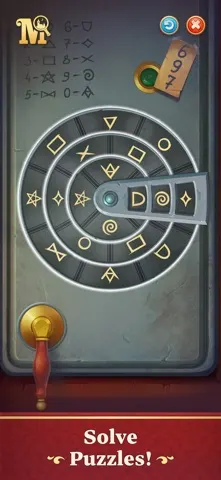
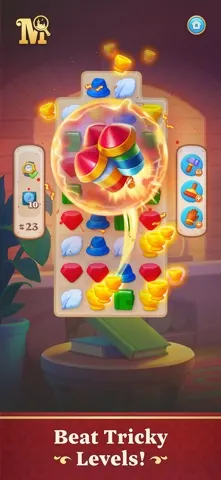
What collect boards want
Patience with one colour. The counter only moves for the goal tile, so a magnificent chain in the wrong colours moves it by nothing, and every goal tile spent in a careless three-match is one the counter will not receive.
The check that decides these levels takes two seconds: count the goal tiles visible and compare with what the counter still needs. If the board holds fewer than the target, the level is about generating tiles rather than spending them, and the correct play is small repeated matches rather than waiting for a large one.
What star-and-task boards want
An eye on the exchange rate rather than the board. Levels produce stars at a fairly steady rate; tasks consume them at a rate the designers control and change as you progress. Almost everything people describe as the game getting slower is the task price rising while the board stays the same.
The habit worth having is to spend stars as you earn them rather than hoarding for a large task. Hoarding produces long stretches with no visible progress, which is precisely the state these games are designed to sell you out of.
Quick way to read any star-and-task game: note how many stars the current chapter needs and how many levels you clear in a sitting. That ratio predicts the next fortnight more accurately than how hard the levels feel.
What hidden-object rooms want
A scanning method, which is a genuinely different skill. The productive approach is systematic rather than intuitive: read the whole item list first, then sweep the scene in bands rather than darting to whatever catches the eye.
Two specifics help more than they should. Items are frequently hidden by being the wrong size rather than the wrong place, so a teacup drawn at the size of a chair defeats recognition entirely. And repeated plays of the same room usually shuffle the item list rather than the scene, so remembering where things are pays across attempts in a way it never does on a match board.
Why the mixing happens
Most large titles in this space now include at least two of the three, because a single mechanic gets tiring over hundreds of hours and alternating them keeps a long game varied. That is reasonable design and it is also why a game can feel inconsistent: you are being asked to switch between skills that have nothing to do with each other.
The practical consequence is worth knowing before installing. If the store screenshots show a grid and a goal panel, expect a puzzle. If they show a room, a task list and a character talking to you, the puzzle is a component of something larger. Neither is better, and both are frequently in the same app.
Choosing between them
If you want something to fill five minutes and close, a plain collect board is the right shape. If you want something to return to daily with a sense of progress, a star-and-task game provides it, at the cost of a schedule. If you want something calm and untimed, hidden-object rooms usually offer a relaxed mode and are the least demanding of the three.
All of that is visible from the store listing in under a minute, and choosing deliberately prevents the common experience of installing a game for one thing and finding it is mostly another.